Monday, October 11, 2021

‘COVID se MUKTI’- MUKTI initiatives for the relief from COVID.

Background of Sundarbans and Birth of Mukti

Sundarbans is a mangrove forest area at the delta of Ganga river, in the Bay of Bengal. It consists of a wide variety of terrains, housing rich flora and fauna ranging from wide mangrove forest, agricultural land, barren land to mudflats. This miracle land, which is home to the well-known Royal Bengal Tiger, is enlisted as UNESCO world heritage site giving it an international identity. However, due to the advent of modern world technology, there has been a tremendous increase pollution and industrialization which has put the survival of this forest at stake.

Mukti is a socio-economic organization that is engaged in helping the people living and sustaining the livelihood in the Sundarbans. This organization strives relentlessly to save the heritage of this grand creation. Mukti took an oath to undertake the HEALER mission which can holistically solve the problems and help best to build a sustainable future.

Activities and Campaigns by Mukti

Mukti has organized many campaigns centered around its 6 department H.E.A.L.E.R. program. HEALER stands for:

H- Health, Water and sanitation:

Aim: To provide and boost health, water and sanitation facilities.

Projects: Medical camps during Kerala flood, Medical camps during Aila and Village sanitation project.

E- Education and Empowerment:

Aim: To help students in their study and provide job-oriented tutoring.

Projects: Coaching centers, Talented Students sponsorship (TSS), Book Bank, Computer literacy, Mukti Institute of Technology.

A- Agriculture reforms:

Aim: To improvise on food security, climate change adaptation and rural economic reforms.

Projects: Sustainable Agriculture Management (SAM), Organic Farming Climate resilient agriculture, Agro-based technology development and dissemination, Agro-based SME and value chain development.

L- Livelihood and Economic security:

Aim: To encourage self-help income generation, skillset development and employment generation for women and the young.

Projects: Mukti Community Development Fund (MCDF), Mukti Community Business.

E- Environment Economy:

Aim: To protect nature through need and value driven plantation and adopting green activities.

Projects: Save the Sundarban (Go Green), GrEEN (Solar power), NaRKEL.

R- Rights and Governance:

Aim: To protect the rights of the people and promote democratic empowered governance.

Projects: EmPOWER (RTI act awareness), Women and child rights and legal aids.


Recent Initiatives for COVID-19 by MUKTI

COVID-19 has tremendously affected our health and impaired our lifestyle over the past 20 months. Along with, rigorous research for vaccines and medications, it has become imperative for the citizens to start taking responsibility to tackle this deadly disease. Mukti has come to the rescue beyond all expectations by initiating campaigns for poor and the needy.


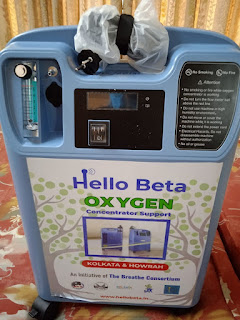
HelloBeta, is one such initiative by Mukti aimed at serving the senior citizens. Being predisposed to numerous risk factors such as age, medical conditions and used of certain medications they pose the greatest risk to succumb to the disease. HelloBeta, has provided them with easy access to daily essentials and medications at their doorstep. Breathe consortium, a Hello Beta initiative is also formed by joint efforts of non-profit organizations in India and US which has helped the COVID-19 patients with not only oxygen support, medical kits and teleconferencing with doctors but also with food delivery for COVID-19 infected patients.

Some of the other initiatives and campaigns organized by Mukti follows:

·       Mukti Covid care Units This Aid assisted units for COVID care installed at various places is currently serving oxygen to the patients which are free of any cost. To name a few, Mukti Community Covid Care unit at Mathurapur, Mukti-Sundarban Covid Care unit at Gosaba, Mukti-ISWS Covid care units at Sundarban. “United Way Mumbai” has supported Mukti in providing 15 oxygen concentrators giving a second life to warriors battling the disease.

·       Covid Care Interim Relief Center: Safe Home and First Aid Service of Mukti: Patients suffering from COVID can avail this infrastructural Home and first aid facilities free of cost until they find an affordable hospital service.


 ·       Mukti Community Clinic: A dedicated healthcare service center to improve access similar to that of a clinic is setup at Purba Sridharpur. This clinic which works six days a week has recruited efficient doctors providing critical medical care in case of emergencies.

·       Mukti Conferment Oxygen Concentrators to the Chief of the Gram Panchayats: Just at a point in time where the nation is still recovering from the disastrous second wave, there are rumors of a possibility of a third wave of COVID. In an attempt fight the COVID third wave, Mukti has engaged several field workers to identify hot spots of COVID and ensured to deploy oxygen concentrators to the victims of the pandemic.

·       Give India Supporting Mukti with 170 Oxygen Concentrators to Save Precious Lives: Mukti installed these concentrators provided by Give India at various places saving an astounding number of 169 patients who had breathing difficulty.


Just as the age old saying “Prevention is better than cure”, it is imperative that we take all necessary steps and precautions to prevent getting infected by the disease. In the times, India has faced many challenges to keep up with the reinforced needs for sanitation, disinfection and hygiene. Mukti along with some other organizations and companies, has been in the forefront in providing hygiene products, masks and healthy food essentials during the pandemic.


·       Hindustan Unilever Supported Mukti with Hygiene Products: “United way Mumbai” and “Hindustan Unilever” has supported 2144 disinfectant spray units and 3048 floor cleaners along with timely disinfection protocols in covid care units.


  ·       Mask Distribution Program by Mukti at Krishnachandrapur during Covid-19 Pandemic: Due to Coronavirus pandemic, masks have now become the new normal ornament of the body. Mukti has also distributed masks thereby keeping the spread of coronavirus to a bare minimum ensuring the health of the people is safeguarded.

·       Mukti Cloud Kitchen Feeding Isolated Covid Patients: The wreaking havoc of Covid-19 has debilitating effects not only on the health but also the appetite of the affected patients. It is thus critical that undernourished section of the society is given access to proper nutrition and wholesome food. In this lockdown period, Mukti has organized ration distribution through Mukti Cloud kitchen initiative at their doorstep.

 Even though the society is feeling the wrath of COVID, Mukti has been a ray of hope all of those inflicted by COVID and will continue to provide a helping hand to those in need of a revival. 

Friday, October 8, 2021

Just pick up the phone and say ‘Hello Beta’ - A Project by MUKTI


Just as the meaning of her name, ‘MUKTI’ specifies redemption or salvation in Hindi, and she has decided to live her life dedicated to living by the meaning of her name! The MUKTI NGO, based out of Kolkata, aims to redeem needy people with shelter, food, medical help and most importantly, love. Being one of the renowned NGOs of the nation, MUKTI is working on various projects including Hello Beta, Help Kolkata Breathe, Help victims of Cyclone Yaas, initiatives to help senior citizens, support to procure oxygen concentrators and many more.

Moreover, MUKTI has an extensive accreditation of other named NGOs and institutions such as Milaap, Impact Guru, Benevity Cause, Nasscom Foundation and many others. Nevertheless, these are just the many names, which all fall under the roof of the immense power of giving!


Hello Beta Project


Out of various projects that MUKTI is running,
Hello Beta is one of the latest non-profit initiatives by Mukti. Encompassed over six areas, with 1200 customers and 2700 orders, the reason behind this project is to ensure the physical and social fitness of senior citizens.

We all know that senior citizens are more prone to any sickness or other virus as they have a comparatively weaker immune system. Thus, Hello Beta Project is here to provide Home Care Medical Support, including oxygen, medicine, outdoor services support for banking and hospital purposes, and supply essential commodities such as grocery, food items, etc., especially in these trying times caused by the pandemic.


About the Hello Beta Initiative


As mentioned above, Hello Beta was created to ensure the good health of senior citizens above the age of 60 years as they have less strong or comparatively weaker immune systems, which make them prone to severe diseases such as heart diseases, lung diseases, diabetes, kidney diseases and much other which affects their health a lot. Thus, to stay protected from outside exposure during the pandemic, Hello Beta was created.


What They Offer

Hello Beta has a range of services for your parents. Here, you can order organic and inorganic products like vegetables, meat, fish, fruits, and grocery. You can order medicines, and it also has doctor consultation services along with telemedicine.

In addition, the projects also have an Hourly Beta service, where you can hire Hourly Beta for official outdoor works such as banking, doctor’s visit and any other job. It essentially gives all our elderly folks a homely feeling that their granddaughter or grandson is just a call away! And they live up to their words.


The Operating Model of Hello Beta

Hello Beta is a non-profit initiative authorised by the local government, and it works with the permission of the local government.

To place an order, first, the customer’s call is received at the call centre where all the details regarding the order and about the customers are taken. Then a delivery boy is assigned, and the maximum possible time is given to the customer.

There is a management team, which keeps an eye on all the deliveries throughout the day to ensure no errors. This process of placing orders has enough filters and checks to stop any abuses.


The Impact of Hello Beta


Although having a large number of services, Hello Beta is mainly serving Oxygen Concentrator during the deadly second wave. Recently, they served seven online patients and have served a total of 1144 patients until now. To give you the exact number about the oxygen administered by Hello Beta; 166,152 hours of oxygen have been provided to date, weighing around 34,094 tonnes.

Moreover, Hello Beta has received around 5000 phone requests to date, and it has supplied around 1200 meals till now. Furthermore, Mukti has also provided an app for Hello Beta that can be downloaded from App Store and Google Store. We urge you to spread the word around so MUKTI can help as many people as possible in their quest!

To donate to Hello Beta, visit: Hello Beta (Donate)

To find out more and donate to other causes from MUKTI, visit: MUKTI (Donate)

#covid #covidrelief #mukti #seniorcitizens #hellobeta #seniorcare #healthcare #elderlycare #westbengal #sundarbans

Thursday, September 30, 2021

PRESERVING THE MANGROVE ECOSYSTEM: AN INITIATIVE BY MUKTI IN SUNDERBAN REGION

                     I have been fascinated by the Sunderbans since I read Amitav Ghosh's “The Hungry Tide”. Imagine being immersed in a furious silence only to be interrupted by the boat's raucous sound. Imagine being intimate, literally absorbing all its essence with a diverse range of flora and fauna. Imagine that there are 100 Bengal tigers in the land of somebody in jeopardy, but still the undisputed Kings of the mangrove territory are declining.

Ernest Hemingway said that “The Earth is a fine place and worth fighting for.”

Sunderban, the Ganges delta in the south 24 paraganas of India's West Bengal state, is one of the world's natural marvels. Mangrove vegetation's structural intricacies generate unique ecosystems that provide biological niches for a diverse range of creatures. Most commercial fishes and crustaceans rely on mangroves for spawning, feeding, and nursery grounds, and many of the people rely on these for their livelihood. Sadly, the picture of this natural beauty today is not what it is used to be.

WHAT PROMPTED US?

The delta is steadily vanishing into the Bay of Bengal due to pollution and global warming. As a result, the delta's existence, as well as its habitats, are in grave risk. Overpopulation with few alternative livelihood opportunities poses a serious threat to these mangrove forest. Mangroves are robust to the damage caused by extreme weather events like cyclones, but physical damages caused by the growing frequency and intensity of extreme events like cyclone “Amphan” impairs their ability to recover. Climate Change forecast that extreme weather would overwhelm 75% of Sunderban along with an increase of 45cm rise in sea level. Researchers believe that increased wave action due to storm (natural) and sediment reduction owing to upstream dams (human-induced) are the two major drivers of permanent land loss to water in the Sundarbans.

WHAT HAVE WE DONE?

MUKTI, in collaboration with the West Bengal government, has made numerous initiatives to raise public awareness about this issue. As part of their Go Green Project, MUKTI also promotes large-scale plantation operations each year.

The project intends to restore the forest and thereby safeguard the Sunderban World Heritage Site. MUKTI has taken several steps to assist and encourage people in the Sunderban and across India to plant more trees. MUKTI donates and participates actively in plantation every year.

SOME OF THE INITIATIVES TAKEN BY MUKTI TO SAVE SUNDERBAN:

1.     Attempts of Mukti to Restore the Mangrove Forest

Mukti oversaw the Mangrove Sapling Plantation Program until last week. In first phase, 400 saplings were planted in the village of Purba Sridharpur, nurtured by women workers who are part of the “Food for Work” project. Mukti has planted approximately 1200 saplings alongside the river "Mony" in the second phase. This workshop was attended by 15 ladies from the model village of Purba Sridharpur. At the period of low tide, the saplings were carried on a boat. Mukti is grateful to "AID," the partner involved with the restore to its past days. Thus, they are not only aiding nature, but also humanity that depends on its survival. Mukti will plant additional mangrove plants in the coming days.


2.     Mukti Planned to Plant 30,000-45,000 Mangrove saplings at Bhubaneswari

MUKTI began planting high grade mangrove saplings for 30,000-45,000 mangroves on Bhubaneswari Island. "AID," has been helping Mukti to plant mangroves in Sunderban to preserve the ecology. The six kinds of high-quality mangrove sapling plantings include Sundori, Goran, Dhundhul, Golpata, Algach, Kankra and Bakra. The plantation programme was launched on 26 January, 2021 by 15 members of the MCDF. They're working on a project called "Food for Work."


3.     Mukti Staffs Visited Mangrove Project Site at Basanti Block

Mukti formed an expert team to examine the situation of Mangrove Nursery and Planting in Basanti Block. The 40,000 Mangrove trees on the banks of Purba Sridharpur river and Basanti block were planted after huge damage caused by Amphan. On 20 November, the five-member team from Mukti visited Basanti Block. They toured mangroves, the Charane Khali nursery under Uttar Mokamberiya Gram Panchayat and the Purandar plantation region along the Matla bank. The area of the plantation is 1 kilometer long. They evaluated the process of conservation and growth of trees during the field survey, obtained quadrat datain terms of frequency, density and abundance for determining the quantitative structure of mangroves. The acquired data were utilized to determine certain ecological factors to understand the population structure and pattern of distribution of mangroves in those places. They were satisfied with the result after their visit. The efforts of the volunteers from Mukti Basanti were recognised and supported by the expert team. These techniques and experiences will in future be followed during planting work for Mangroves.


4.     Mangrove Plantation Preparation Work at Purba Sridharpur

For a mangrove plantation near Purba Sridharpur, Mukti prepared 10-12 Hectare river bed next to the River Thakurain. Mukti aims to plant Sunderban's ten lacquered mangrove saplings. 16 women were engaged in canal cutting from Purba Sridharpur. The river itself will be filled with drains as high and low tides always pass through in these areas. The mangroves will be planted after three to four days. These females receive a fee of Rs 2,000 and a dry ration from Mukti under the project 'Food for Work.' The Mangrove afforestation supports "AID," one of the respectable donors of Mukti.


5.     MUKTI decorated Nilratan’s front yard with varieties flowers and fruits

MUKTI conducted an investigation, and as a result undertook to set up fruit and flower plantations on the roadside in front of the buildings. It has been found that there was no greenery available in an open space in front of Nilratan's house. From MUKTI to Nilratan a few floral and fruit saplings were given. He ensured that the plants were well looked after and healthy. The garden was slowly filled with fruit and flowers, bringing a lot of change to the immediate environment of Nilratan. The development was not just beautiful and cosmopolitan, it was also friendly to the environment; a source of fruit and flowers for the family and neighbors. Now, his neighbors, together with MUKTI, are also inspired to embellish and develop their environment. This in turn improves their financial, social and environmental characteristics.


Mother Nature is trying to give us a wake-up call in the language of the cyclones and extinctions telling us to be more responsible towards her, to evolve and come up with a new way of sharing the planet. This is the real truth that we have been avoiding; running away from our responsibilities towards nature.

“The Earth will not continue to offer its harvest, except with faithful stewardship. We cannot say we love the land and then take steps to destroy it for use by future generations.”

-John Paul II

Want to know more about us? Click here: https://muktiweb.org/

Want to help us in making a difference? Donate here: Donate to MUKTI causes | Mukti (muktiweb.org)

#mukti #gogreen #sunderbans #savetheplanet #planttrees #environmental #pollution #ecofriendly #climatechange #sustainability #mangroove 

Developing a modern village in Sunderbans- Mukti Gram

Back in June 2020, as I was working from home, one day I had a wild idea. I thought, ‘Why am I living in the city just to be indoors? Why don’t I go live somewhere closer to mother nature, my birthplace, Siddheshwarwadi, a small village in Maharashtra? It will improve my health, my mind and my soul as well.’ I felt this was a good idea. Go back to live in village. But is it practical? Is it?

Mahatma Gandhi once said “If the villages perish, India will perish too. It will be no more India. Her own mission in the world will get lost.” India’s urban population has risen from 17.1% in 1950 to 29.2% in 2015. On top of this, a report from UN speculates that India’s urban population will overtake the rural population by 2050.

One of the reasons behind this trend is lack of development and employment opportunities in present day villages in India. With this background, we are seeing the need to develop villages in better, sustainable ways. It is important to cherish the villages and the heritage of India in them.

The Sunderban areas of West Bengal has lacked development opportunities over the decades and towards this objective, Mukti, a socio-economic development organisation, are developing Mukti Gram, a modern integrated village. Purbaashridharpur village, devoid of many basic facilities like Transport, Education, Health and Hygiene, livelihood etc., is being developed as a model village by Mukti.

What is a model village?

Key elements of Mukti’s model village are

• Sustainability

• Community development

• Technology

• Connectivity

Main pillars of model village interventions are

• Empowerment & Capacity Building of Communities

• Access to Quality Services

• Improvement of Infrastructure

• Promotion of Sustainable Livelihood Opportunities

And the operational model is based on

• Economic

• Human

• Social

• Personal

With this well-defined plan for the model village, Mukti has plans to

• prevent distress migration from rural to urban areas in long run.

• provide easier, faster and cheaper access to urban markets for agricultural produce or other marketable commodities produced in such villages.

• contribute towards social empowerment by engaging all sections of the community in the task of village development.

• development of essential infrastructure in the village through active engagement & partnership with public and private sector stakeholders.

• increase sustainable livelihood opportunities to the families and support the entrepreneurs to have easy technical, market and financial linkages.

• improve the access and quality of services which are essential for survival, development, protection and participation of children, families and village community.

• build and enhance the capacity of children, youth, caregivers and various community structures such that they can actively participate in the decision-making processes for the development of the village and exercise for their rights.

along with other objectives.

Success at Mukti Gram

Some noteworthy works that have been ongoing are,

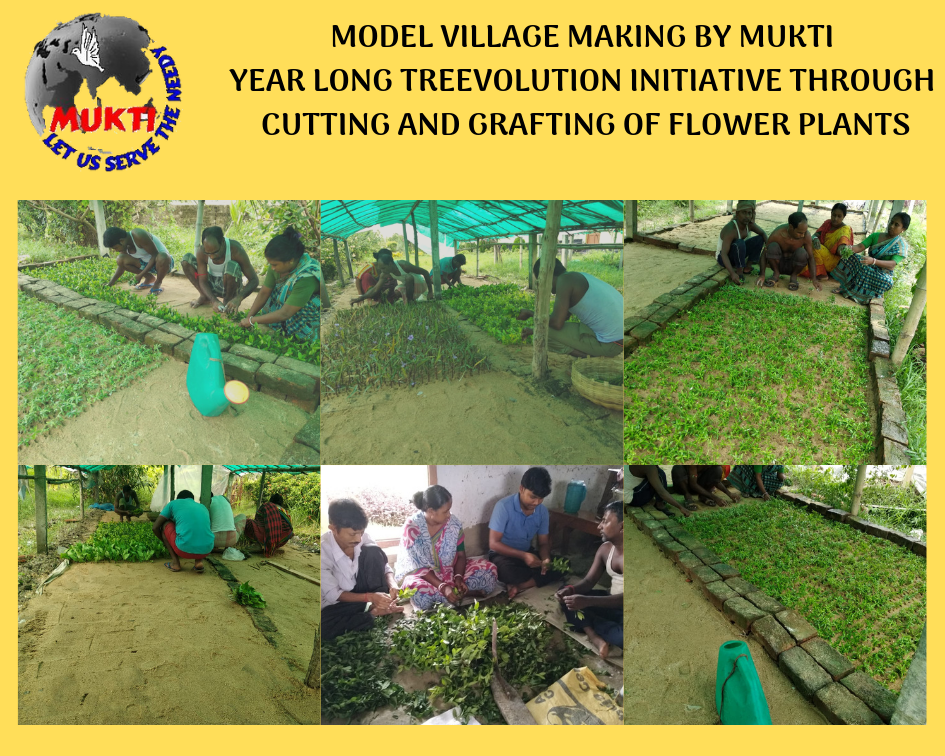
1. Yearlong treevolution initiative through cutting and grafting of flower plants.

The aim of the project is to cover entire villages with different kinds of flower plants. This initiative is done for transforming villages to eco village.

A picture containing text, grass, different, several

Description automatically generated

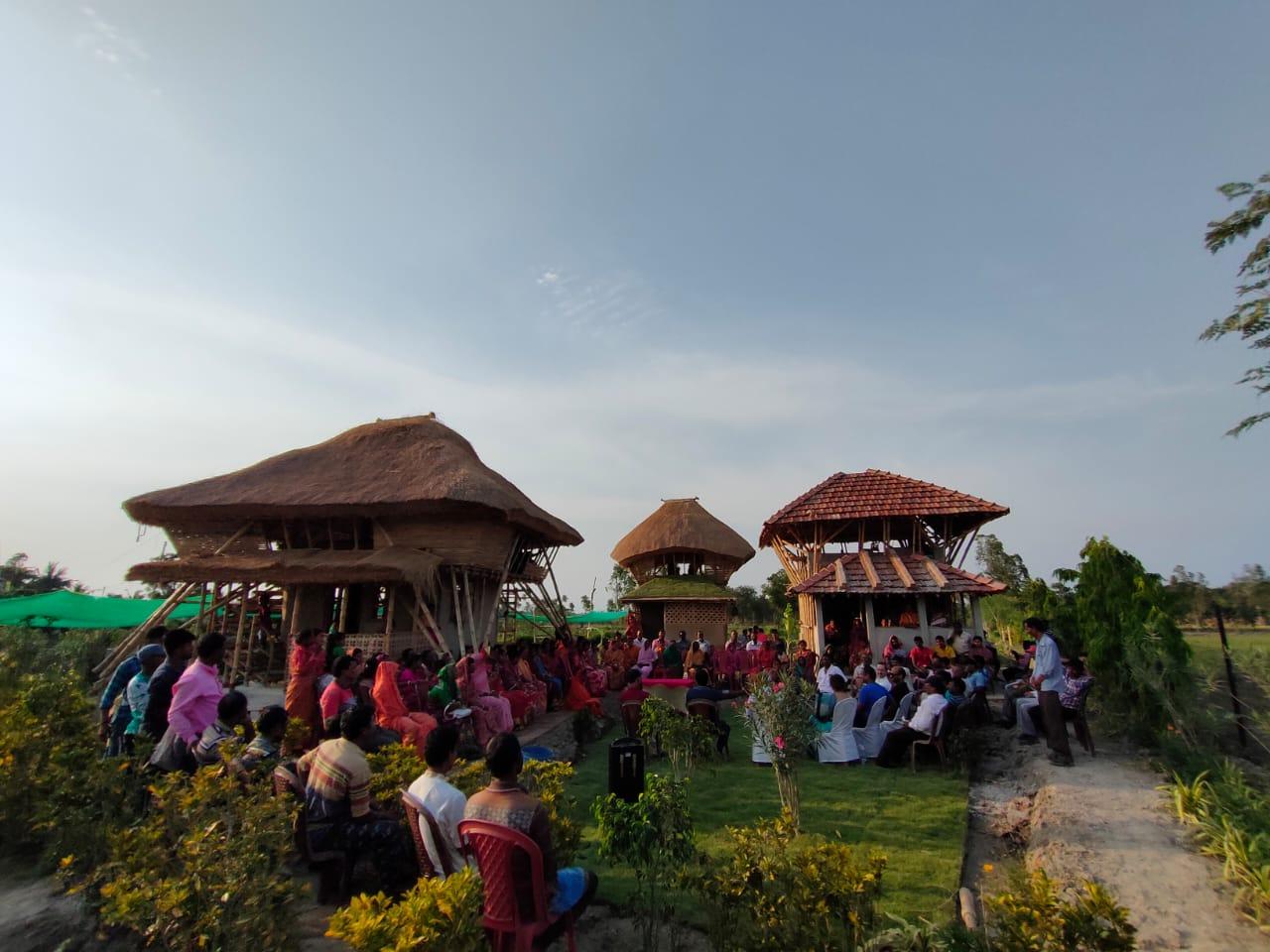
2. Construction of model houses at Mukti Gram to withstand harsh climates.

Mukti has constructed 3 cyclone tolerant houses on prototype basis under the guidance of an architectural firm. The village is prone to frequent cyclones and the impact is huge enough to affect the lives and livelihood of the community.

A group of people sitting outside

Description automatically generated with low confidence

3. Mukti Gram Clinic.

Patients are being treated by the doctors at Mukti Community Clinic at Mukti Gram. The clinic has served 1000+ patients since January through local clinic visit and 200+ patients with global panel doctors from across the globe with various specialty clinics.

President of Mukti, Mr. Sankar Halder, during an event at Mukti Gram said that, “Model village does not mean only the beautification of any village but beyond that. Money alone does not convert a village into a model village or ‘Adarsha Gram’.”

“A conceptual model village is one where villagers act as decision makers, partners and beneficiaries with multi-sectored, multifunctional and integrated development to achieve holistic and sustainable development backed up by futuristic and progressive skills leading to higher levels of productivity and improvement in overall quality of life.”

Mukti has already planted trees, installed lights on roads, made houses, created nests for birds, planted garbage bins for village beautification, created job opportunities for the villagers, built study centres for the students, built health clinic and so on.

The future

Mukti is working on building community health care centre, school, agricultural centre and many more.

Thanks to MUKTI for taking an initiative through this project and setting up an example for more of us who will march back to villages and try to make them “Sujalam Sufalam” again.

Find more about Mukti Gram here: Mukti Gram, A Modern Integrated Village | Mukti (muktiweb.org)

If you want to support MUKTI, please donate here: Donate to MUKTI causes | Mukti (muktiweb.org)


Saturday, August 20, 2011

Field survey on medical access and human trafficking in the Sundarbans

Field survey on health access and human trafficking
Kankandighi and Nagendrapur
South 24 Parganas, West Bengal
InMaLanka-Mukti
Thursday 28th and Sunday, 31st July 2011

Preamble

The inhabitants of the Sundarbans are facing difficult living conditions. Some fundamental rights are violated, including access to care, professionals and health facilities, due to bad roads, too big distance with the infrastructures and lack of money. In addition, the 2009 Aila cyclone destroyed many arable lands, which compromises the ability of families to answer their food needs. Often the girls decide to go in city, which is a less mouth to feed and future source of income for relatives. They hope to find a job but land in human trafficking networks which leads them into prostitution or forced marriage and work.

The purpose of this study is to understand the importance of these problems by the state of access to water, health facilities and understand the lifestyle and socio-economic environment in which live the women. This last point will be used to apply for the 2011Human Rights Award of the French government. Otherwise the report will be used for the project of mobile van clinic and primary cares.

The study was conducted by Aurélie Bezault, along with Bala for the translation, guided by Arabinda Mondal, a member of Mukti and coordinator of the SAM program.
The mission took place on 2 separate days, Thursday 28 and Sunday, July 21, 2011, mainly in Nagendrapur GP.
To reach this place, a train was taken from the Jadavpur Railway Station, in the south of Kolkata. After 1:15 journey, an auto-rickshaw is taken during one hour to reach Raidighi, where we have a second auto-rickshaw to reach Nagendrapur one hour later. We need a little over 3 hours to come there.


Areas studied:

24th South Parganas district
In Nagendrapur GP, the study took place in Nagendrapur and Purba Sridharpur where Mukti has an office in which could be interviewed women from a Self-Help Group.
In Kankandighi GP, the study took place at Kankandighi.


Method:
Interviews based on questionnaires prepared in advance
Meeting with a group of women, a Self-Help Group, a nurse of a Primary Health Center
Meeting with Prodhan of Nagendrapur G.P
Meeting with a woman member of the board of the Prodhan’s Council in Kankandighi GP


Details of the survey:

Thursday, July 28
The day began with an interview with a woman whose teenage daughter has disappeared. A young girl told the forced marriage of his sister. Then we had an interview with a group of women on their medical needs.

Sunday, July 30
Meeting in Kankandighi with a woman belonging to the Council of the Prodhan. Then interview of the Prodhan of Nagendrapur GP. Visit of a Primary Health Center and discussion with the Nurse. Meeting and questions with a Self-Help Group.

The objective of the study is to determine at first what are the needs of the population in terms of health and improvement of living conditions in order to respond in the future by the mobile clinic program. It was necessary to understand which diseases were most prevalent, what people wanted as common infrastructure and medicine. Special attention is given to women including the issue of pregnancy during which they remain fragile.
The second point was about the state of human trafficking, especially women in the region. These are first victims: they do not go to school after primary school, marry early to avoid paying a dowry and work very early. They hope of a better pay and living conditions in the city. Some are sold by their parents. The study wanted to understand, through interviews with authorities and victims, the mechanisms of poverty that make them the victims of human trafficking networks in order to prepare a program on the issue.

Reports by sector clusters
General data on Nagendrapur G.P

Demography
Total: 21 335
Total number of women: 10 135
Total number of men: 11 220

Security
5-6 girls are missing in the 15 villages. They are unmarried, between 16 and 20 years.
The abduction of young girls concerns very poor families whose activity does not provide sufficient income
The girls all moved on the promise of a job in the city
All did not go to school
The police is informed only at the insistence of the Panchayat (fear of corruption and lack of money, trust)
When they work, women have no safe collective place to rest
NB: During the interviews, it was said that domestic violence did not exist

Health
People wait before seeing a doctor if the healing comes by itself. Everything depends mainly on their money. They wish more modern medicine.
According to the women, they are more affected by diarrhea, asthma, fever and anemia, especially those pregnant and elderly. Muscle pain, soreness and itching are also common. During the rainy season, cough and fever affect older women.
Skin diseases are increasing.
Women give birth at home. There has been no maternal deaths for 12 years and only some premature births. Although they prefer to go to the centers, they lack of money (they blame the hospitals to have to pay for everything) and sometimes lack of time (the nearest hospital is Raidighi, 1:20 to reach it (16 km). This requires finding a means of locomotion quickly). Moreover, as women work very hard, they realize late that delivery has begun.

Women have 5 to 6 children. Their first child is born when they’re 17-19 years (depending on the women interviewed). They married between 15 and 16. The use of the pill and condoms is widespread.

Nutrition
Meals are mostly composed of rice, vegetables and fish from the pound.
During pregnancy, women do not have particular dietary or nutritional supplement. They take iron tablets and have injections against tetanus.
They are breastfeeding for 6 months.
Children at birth weigh between 1.5 and 2 kg
Women state that they have little food and difficulties in feeding their children

Water, hygiene, sanitation
The tubes are not in good condition and do not work 24/24. The water contains impurities: the non-clean water is the cause of many diseases affecting people.
- 1 / 3 of the population does not have private latrines (on 30 000 people, nearly 2,000 families involved)
There is no collective sanitation
Women need to walk 10 minutes to go relieve himself. They go into the woods or fields, only even if it is risky.
Women wash twice a day at the pond with soap purchased in town
During their periods, they use a towel they have made themselves but that are not properly cleaned. This causes itching, the appearance of viruses. Women don’t understand where it comes from.
- The waste is buried, thrown everywhere. There is no place for this purpose. Some people recover it as fertilizer for the fields. Nothing is burned and the plastic is a problem.

Education:

97% of children attend (mandatory). 80% goes to the 8th standard and 40% until 10th standard
2 High School, attended by 10% of students (250 children)
Most girls stop their education after primary school (compulsory) to work with their parents.

Some married too young, because then there is no dowry demanded. Most left school at 15 because the family cannot pay (Legal age in India: 18 years).

Socio-economic, livehood
Women's SHGs grow coconut and breed exotic birds
Most houses have walls of clay and a thatched roof
The animals live near homes or in the yard
Poverty of the people whose activity is not sufficient to enable them to live

General data on Kankandighi G.P

15 villages

Demography

Total: 21 824
Total women: 10 417
Total men: 11,407

Security
No cases of missing woman
An NGO has campaigned against human trafficking

Water, hygiene, sanitation
A tube-well for about 350 people
The pipes are in poor condition and are often broken
The water tube is not sufficient for daily life so the vegetables for the meals are washed in the pound
There is no private latrines in most homes and there is no common health infrastructure
-The waste is deposited in a large container and a few days later recovered as fertilizer. The plastic is burned, causing respiratory problems.

Education
11 primary school
1 Governmental High School
2 Governmental Secondary School
A school up to 8th standard and led by an NGO
2 Child Education Center
70% of children go to school

Health
The nearest hospital is the Raidighi (4 km): Many women will give birth there even if the beliefs, superstitions make that the home is preferred to give birth
The most common health problems are fever, cough, diarrhea, colds, stomach acid and pains
The hepatitis B is increasing (5 / 100)
Cases of depigmentation are more frequent (parasols and sun lotions are expensive)
90% of people are not aware of health problems, immune system and health

Socio-economic and livehood
30% of farmers (Main industry: Agriculture)
Most houses are built of clay and a thatched roof.

General recommendations by clusters

Security
Organize awareness campaigns for parents and children (what procedure?)
Workshops on women's rights, AIDS
Create groups of women to ensure the movement and why not build a place where they can rest, provided with health facilities where they can go not far from the field?
Train the police to offer effective, listening and following the procedures in case of disappearance

Create a warning board about women trafficking at the entrance of the road of the Sundarbans


Water, hygiene, sanitation
Organise regular audits and reviews of the status of the tubes and water quality
When the tubes are bad, replace them with more modern so as not to have a series of failures in the long-term
Offer at least a set of communal latrines per village
Building private latrines for those who request
Organize a campaign to boil water and the importance of washing hands regularly
Create one place in each village where waste is stored, destroyed or burned
Awareness about the dangers of plastic for the environment (including land and water)

Health
Provide basic medicines to treat diarrhea, fever, cough and asthma

Assure a medical follow (especially for asthma)
A prevention campaign about prolonged sun exposure and its consequences
Build a clinic with beds and professional equipment. Staff of the Medical University?
Provide ambulance service
Provide food supplements to pregnant women until the end of breastfeeding
Finance a vaccination campaign against hepatitis B?
Make a campaign of information on genital diseases and how to prevent them

Nutrition
Create a garden with vegetables at school, administrated by the kids themselves
Identify families in great difficulties and assist them to feed the relatives

Education
Create a specific program on girls' education (scholarship system for them to continue their education until 18 then TSS)
Form some girls to trades (hairdresser? Nurse?) A useful job for the locals

Livehood
Diversify the activities of SHGs: women ask for more aid to have domestic animals (cows) so that each home has its own farm (chicken, duck, goat).
Develop the activity of weaving (local specialty) or manufacturing paper bags

Conclusion
While living in the Sundarbans is already difficult environmental conditions and climate, the inhabitants suffer from more difficult access to care and medical staff. This is a vicious circle because people, especially women, if they are sick, are not capable of ensuring their work, therefore, can’t earn money and feed their families as needed. The mobile clinic project must meet the needs of these women, longing for such an initiative.
In addition, we can also provide structures improving the lives (and health) of people, including a system of latrines.
It appears that one of the priorities is to ensure education for all, especially girls so that they remain in control of their future and a job as a domestic in the city is not a lure to help financially their families.
The SHG project should also be extended to other women and offer other activities. It is the wish of the participants because they recognize an improvement in their financial situation.

Thursday, December 30, 2010

Survey on Gender Issues in Sundarbans, by Blanche Mattern

During few days, I stayed in Mukti Office in Nagenderpur. In order to conduct a survey on WATSAN (Water and Sanitation) issues for women, I met Mukti's coordinators and villagers from this Gram Panchayat and Kankandighi one. It was also the occasion to see the working field of Mukti. I met the women of Self Help Group (SHG) who work on exotic birds activities, visited the coconut nursery and the library.
I noticed that the Nerkel project is a really successful one and the idea of planting coconut tree on clay roads was brilliant. Indeed, coconut trees avoid soil erosion and it is the better way to avoid broken clay roads after rain falls for example.

I interviewed families and visit houses. Meetings were conducted with farmers and women SHG. As I am not a Bengali speaker, someone translate for me. I was really touched by the help of Mukti coordinators that help me a lot by organizing the meeting and all my stay there.

Contact with villagers is quite easy as they seem to respect a lot Mukti workers. The organization is conducting a goof work on the area. Mukti is not working in the Sundarbans, Mukti is a part of it.

I was really surprised to see that people do not have problems to express their daily issues. Even if you have to ask to all the men to leave a meeting, women will finally speak easily about their health problem. Villagers are really open to new technologies for example they do not hesitate to show their desire to shift from kerosene lamp to solar one.

In WATSAN issues, women ask private latrines and I was surprised to listen them explaining the side effects of common ones. As I was surprised to listen men explaining why they required the new models of tube well, with a complete picture of all the technical problems of the one they use and the benefit they could get from new models.

I was really touched to hear women answering to my question “what could be for you a development?” by their concern on women health issues, economy increasing in order to let their child study as far as they can. Even when I was speaking about the early age of marriage and first child people answered that marry their daughter too early was not a choice but an economic obligation because of the lake of income. They could not let them at school longer and spend money on education and food. If they get an other choice, they will go for it.

I travelled a lot in India, if you ask this kind of question in rural places you get used to hear that early wedding is the only choice but people can not give you a so complete explanation. Here, you do not have to make understand people, they already knows and get a global view on their daily issues.